
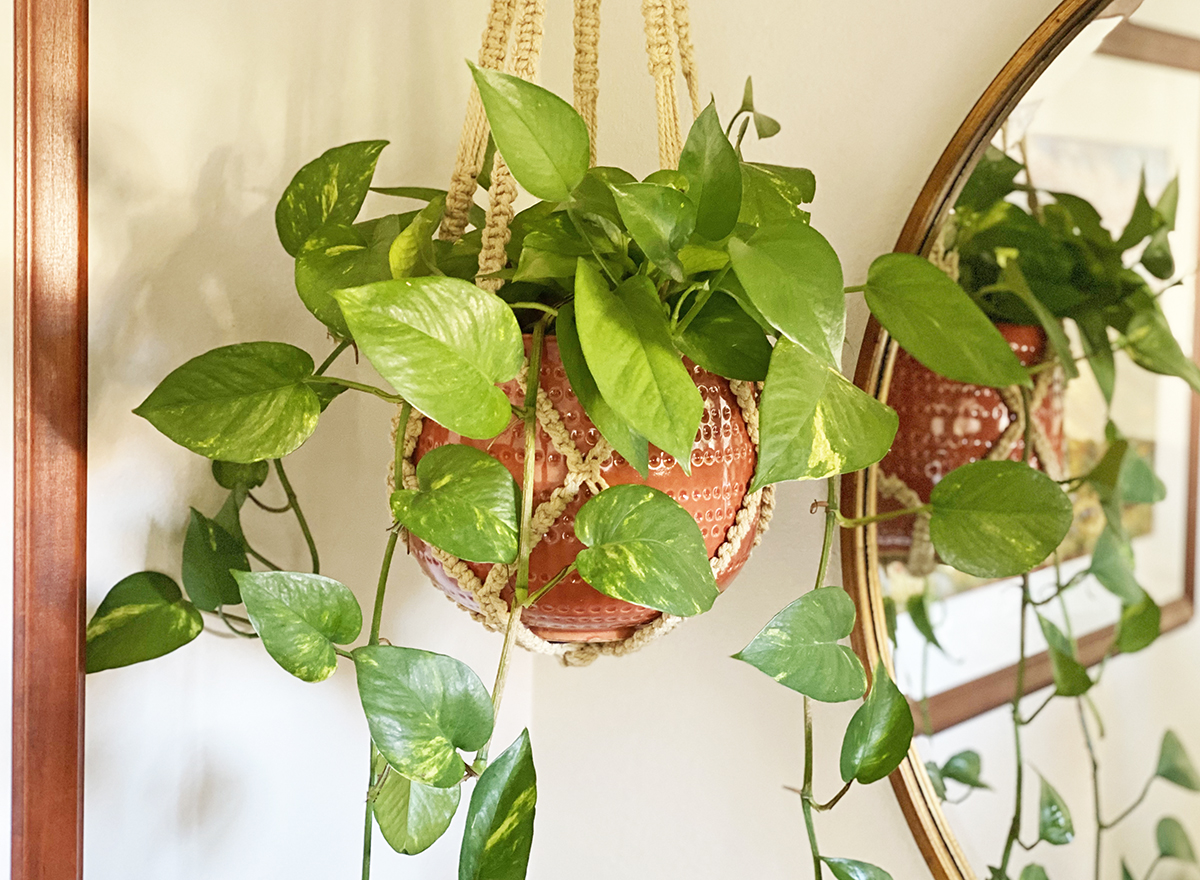
I love my houseplants. They are so beautiful, and most don’t require too much care. I do like to choose plants that aren’t very fussy, and one of the easiest to maintain is the pothos plant.
The pothos plant can be found pretty much everywhere in garden centers, design centers, nurseries, grocery stores, etc. Even if you don’t know the name of the plant, you will probably recognize one when you see it. It is sometimes called devil’s ivy (I never call it that). It has somewhat heart-shaped glossy leaves and is a naturally trailing plant. The leaves can be green or marbled with yellow or white. In my experience, it grows fairly rapidly.
I find that it does best in medium to low indirect light. Most of my plants are in 6” plastic pots. I tend to leave them in these pots for years. If the soil gets low, I add new soil to freshen it up. If I have to, I will re-pot to 8” or the next size up. It’s important not to overwater any plants, and the same goes for the pothos.
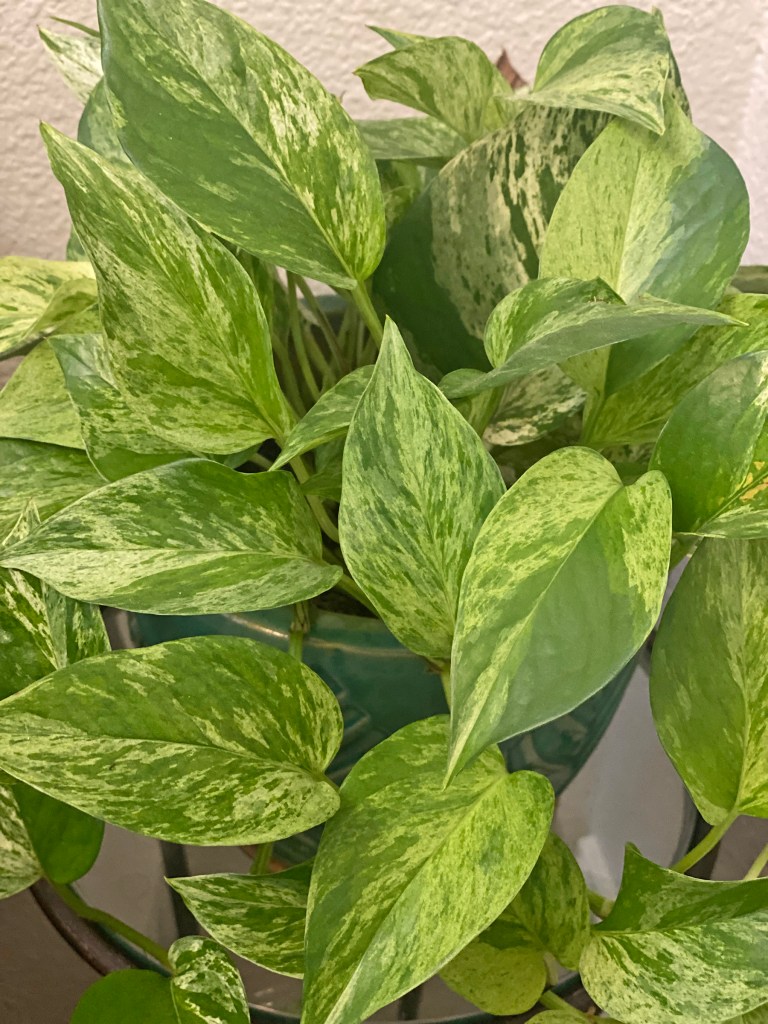
I water my pothos plants about once a week. Make sure you have some kind of plastic saucer under the plant pot to collect any water runoff. Every few weeks, I will add some liquid plant fertilizer to the water. Don’t be afraid to feel the soil of your potted pothos before you water. If it is wet, hold off on watering, but if dry, go ahead and give it a drink. These are my own loose guidelines for my pothos, and I have been quite successful for decades.

A cool thing about pothos is they usually let you know when they aren’t too happy. They can usually put up with a certain amount of neglect and have the ability to bounce back even if you think they are toast. Their leaves and how they carry them are a good indicator of their health and happiness. If they are thirsty, the leaves and stems will droop and sag and just look sad. They can be sad like this for a while, maybe a week or more. But don’t test their limits.
Fortunately, with some water, they do bounce back in 24-48 hours. Fight the urge to overwater. If you do overwater, they will let you know. Some of the leaves will turn yellow then brown. The plant may begin to look “leggy” and not full and bushy. You can pull the yellow leaves and even trim the plant to make it look fuller. Before long, the plant will grow new leaves and have a tighter, neater appearance.
The pothos is a trailing plant with an ivy-like appearance that lends itself to hanging pots/planters. I was a teen in the 1970’s, so I gravitate to those macrame plant hangers. I like to let plants do their thing; let them take on their natural form or shape. Whether in a plant hanger or on a plant stand, the pothos trails nicely. And if it gets too unruly, it’s easy to trim. And if you trim too much, don’t worry; it is happy to grow back quickly. You can even take those trimmings and place them in a vase or glass of water. Pretty soon, the cuttings will grow roots, and you can have more pothos plants!
And absolutely nothing is wrong with having dozens of houseplants. Or giving some as gifts to friends and family.

 Jackie's Bower
Leave a comment